English























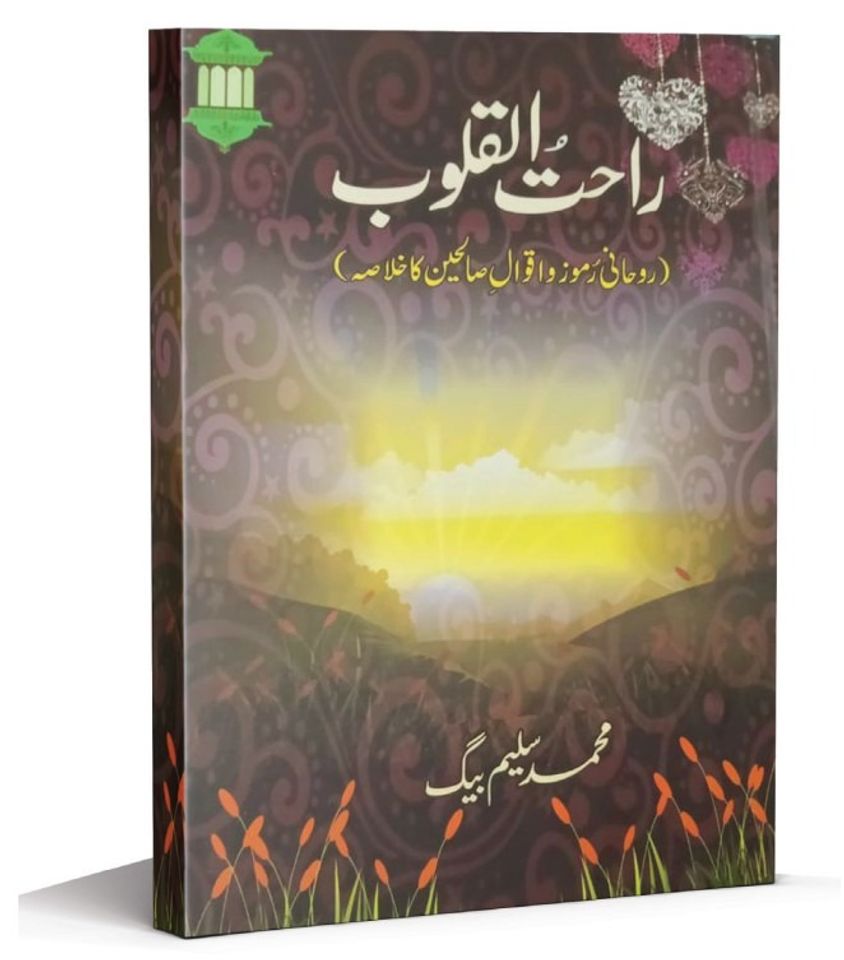

























































































































































































































































































































































































































An addition to the literature on Sufism

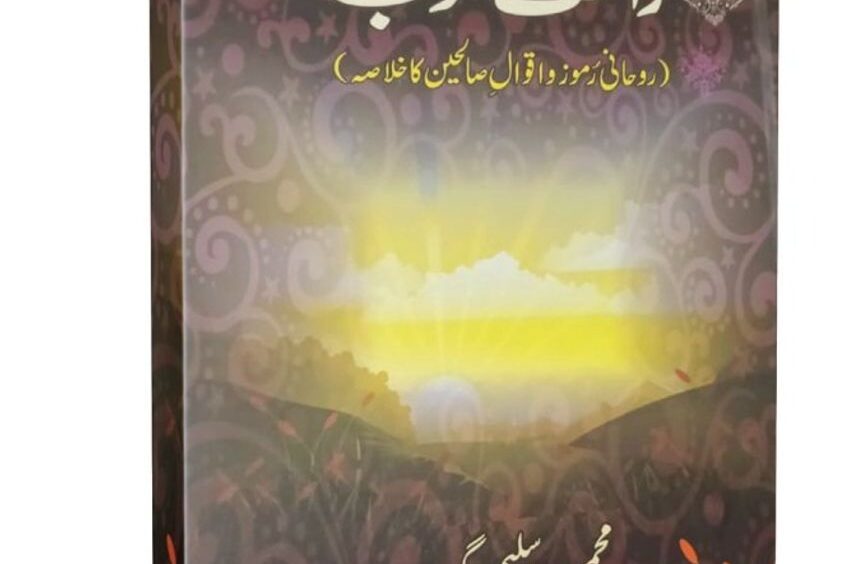

Rahātul Qulūb (The Comfort for Hearts) is a new addition to the vast corpus of literature on Sufism. The subject has always been fascinating and intriguing—simultaneously inspirational and controversial, engrossing yet often incomprehensible to the average mind. Notwithstanding its immense contributions to theology, mysticism and spirituality, intellectual opinion remains sharply divided on the Oriental endeavor that projects Sufism as the sole representative of Muslim theology.
The Oriental portrayal of the Sufi episteme—as a transcendental, all-embracing yet individualistic approach to the exploration of ultimate truth—has exercised a profound influence across the Muslim world. Although Greek, Catholic, and Vedantic elements have significantly shaped the structural composition of universal mysticism, the core Islamic influence has often been obscured by multiple, and at times conflicting, interpretations. From the inference of Ihsan derived from the Hadith of Gabriel, to the non-Qur’anic denomination of Tasawwuf, and finally to the emergence of a multitude of silsilas—both adherent and non-conformist—revolving around charismatic Sufi personalities, the philosophy has undergone continuous transformation. Yet, despite these variations, the central theme remains consistent: the purification and liberation of the soul from temporal attachments.
The author, Master Saleem Baigh, is an octogenarian academic living with severe physical limitations in the remote village of Lateef Abad in rural Baramulla. He inherits an enviable legacy of Sufi scholars and teachers, marked by simplicity, propriety and forbearance. Having survived a near-fatal encounter in the late 1990s—when a volley of bullets struck his right arm and necessitated complex reconstructive surgery—he remained undeterred in his engagement with the subject.
This 350-page work is a blend of collection, compilation, commentary, examination and anecdotal narration. However, the analytical rigor in examining mystical claims and the care in appreciating deductive conclusions are somewhat uneven. The book presents an abridged account of mainstream Sufi teachings, eminent personalities, didactic narratives and varied mystical experiences. It appears that the author sought to document, with urgency, the wealth of knowledge he possessed before the inevitable departure of the soul. This urgency may have affected the structure, resulting in uneven chapterization and occasional repetition. The work reads at times like a rapid succession of thoughts—almost a whirlwind of ideas.
Sufism remains an enriching and elevating experience so long as it is grounded in personal piety and spiritual integrity. Problems arise when it ventures beyond its experiential domain into speculative metaphysics, making unverifiable claims about the unseen and attempting to unravel knowledge that, according to Islamic belief, remains divinely guarded. This challenge is compounded by the language of Sufism, which is often allegorical, diffuse and difficult to comprehend.
This stands in stark contrast to the style of the Holy Qur’an, whose greatest miracle lies in the clarity and unambiguity of its language—accessible even to ordinary minds with modest reflection. The Qur’anic discourse, aimed at the moral, spiritual, and social uplift of humanity, addresses the general masses in a direct and comprehensible manner. In contrast, Sufi metaphysical assertions are frequently couched in abstract and esoteric language, seemingly intended for a select group of mystics and advanced theologians. Does this not raise concerns of intellectual exclusivity?
Some justification is sought in the interpretation attributed to Imam Ja‘far al-Sadiq, the 8th-century jurist and founder of the Ja‘fari school of jurisprudence, who is said to have suggested that certain meanings of the Qur’an are reserved for those endowed with superior intellectual faculties. However, such an inference does not find explicit support in clear Qur’anic verses or the Sunnah. The issue is addressed in Surah Aal-e-Imran (3:7), which states:
“He it is Who has sent down to you the Book. In it are verses that are clear and fundamental—they are the foundation of the Book—and others that are allegorical. Those in whose hearts is perversity follow the allegorical, seeking discord and pursuing its hidden meanings. But none knows their true meaning except Allah. And those firmly grounded in knowledge say: ‘We believe in it; all of it is from our Lord.’ Yet none take heed except those endowed with understanding.”
Despite employing relatively simple language for a complex subject, the author’s attempt to avoid controversial terrain does not always succeed. While he skillfully addresses the contemplative stages of Sufi practice, the intellectual journey toward higher realization, and the classification of major Sufi orders, his treatment of contentious issues—such as Ibn al-‘Arabi’s doctrine of monism, the concept of union with God, and claims of spiritual ascension—remains less satisfactory.
As the influence of Ibn al-‘Arabi (1165–1240) expanded across the mystical world, local scholarship in South Asia effectively moderated its more extreme interpretations. A defining moment in this intellectual history was the allegiance of Sheikh Ahmad Sirhindi (1564–1624) to Khwaja Baqi Billah, marking his entry into the Naqshbandi silsila. Revered as Mujaddid Alf-e-Sani (the Reformer of the Second Millennium), Sirhindi initiated a corrective transformation within Sufi thought.
Khwaja Baqi Billah is said to have cautioned Sirhindi against composing a Persian quatrain endorsing the doctrine of Wahdat al-Wujud (Unity of Being), urging repentance. Sirhindi subsequently advanced his own doctrine of Wahdat al-Shuhud (Unity of Witnessing), which countered pantheistic tendencies while still acknowledging Ibn al-‘Arabi’s intellectual contributions. This doctrinal shift is often viewed as both a continuation and a corrective transition within Sufi metaphysics.
Among the various Sufi orders, the Naqshbandi order stands out for its strict adherence to the Shariah and its avoidance of innovations and syncretic tendencies. It enjoys widespread following in Central Asia and the Indian subcontinent, including Kashmir, where it is also influenced by the indigenous Rishi tradition.
The final chapters of the book attempt to explore the mystical thought of Jalaluddin Rumi and its influence on Sufism. The author deserves credit for navigating the complexities of Rumi’s metaphysical discourse while maintaining alignment with Qur’anic principles, offering necessary cautions where required.
In his Mathnawi, Rumi weaves together diverse themes into an intricate tapestry that demands patience and careful reflection. As noted by the distinguished scholar Khalifa Abdul Hakim, “The Mathnawi of Rumi is neither a system of philosophy, nor theology, nor mysticism; nor is it mere eclecticism.” Rumi’s genius lies in his ability to interlace simple narratives with profound insights—moving seamlessly from moral instruction to ecstatic expression, and from storytelling to deep metaphysical inquiry.
While Al-Ghazali (1058–1111) may hold precedence in the historical development of Islamic philosophy and mysticism, Rumi remains unparalleled in emotional intensity, originality of thought and expressive freedom.
The book is well produced, with commendable binding, paper quality, and cover design. Although occasional typographical errors are present, it remains largely free from grammatical inaccuracies.